
Understanding The Gut Microbiome:
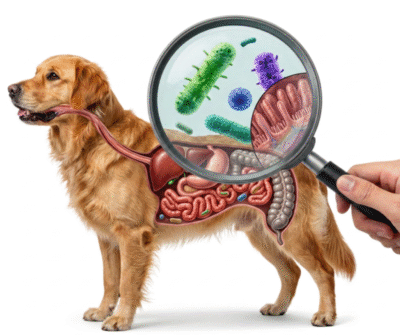
The gut microbiome is a complex system of trillions of microorganisms – including bacteria, viruses and fungi – that live inside your dog’s digestive system. It plays a crucial role in your dog’s overall health and can influence many things from digestion to immune function.
The microbiome helps your dog with many functions:
- Digestion & nutrient absorption
-
Supporting the immune system
- The gut brain axis – the communication system between the gut and brain
- Skin and coat health
-
Metabolism and weight
Some possible signs that could be associated with this are:
- Irregular bowel movements: loose stools, constipation.
- Frequent stomach upsets: such as regular vomiting or digestive discomfort.
- Regularly passing wind or noticeably bad breath.
- Scooting or itching their hind end.
- Skin issues: persistent itching or chronic skin conditions.
- Food sensitivities.
- Weight gain or difficulty maintaining a healthy weight.
- Anxiety or sudden behavioural changes.
How Can Nutrition Impact the Gut Microbiome?
In Chinese medicine, nutrition is considered the foundation of health and disease prevention. The digestive system is responsible for extracting vital energy from food, which eventually becomes Qi (energy/life force). By providing proper nourishment, we help keep the digestive system resilient and support a healthy immune system.
This wisdom aligns perfectly with modern science: nutrition plays a big role in shaping your dog’s gut microbiome because the microbiome feeds on what your dog eats.
Unfortunately, many ultra-processed pet foods contain fillers, additives and high levels of carbohydrates. Studies have shown that this can contribute to increased inflammation in the gut.
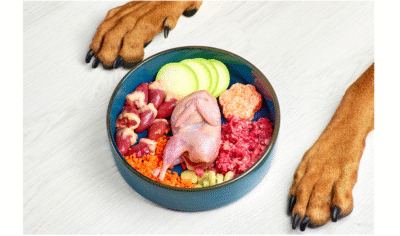
Opting for a high-quality, species appropriate fresh diet – such as raw, lightly cooked, or home-made food is a good foundation for your dog’s health and overall wellness.
- Promoting microbial diversity – greater diversity can be associated with a more resilient digestive system.
- Reducing inflammation.
- Supporting beneficial bacteria to flourish.
What enters into the mouth and stomach has the possibility to shape the whole digestive system…
The Impact of Stress:
Stress is a completely natural response in our body. While short term stress can be a helpful survival mechanism as in keeping you safe, prolonged or chronic stress can negatively impact both physical and mental health. This stress could be external, such as in the environment (lifestyle, chemical exposure etc), or an internal stress, such as a physical discomfort within the body or anxiety.
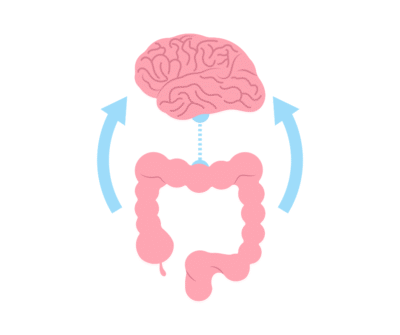
Today, we now recognise that the gut microbiome influences far more than just digestion. There is a complex communication system known as the ‘gut brain axis’ between the gastrointestinal tract and the central nervous system, they are in constant communication.
What Simple Steps Can You Take to Support Your Dog’s Gut Health?

1. Nutrition & Nourishment
– Feed mindfully: Serve meals in a relaxed environment, avoid rushing. 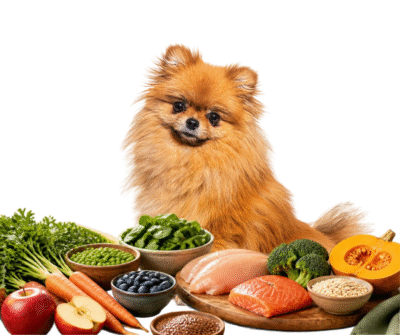
– Fresh Food: Feed a high-quality, species appropriate diet (raw, gently cooked or homemade food) instead of ultra-processed food like kibble.
– Temperature: Avoid feeding frozen food, as this can weaken and ‘shock’ the digestive system from a TCM perspective. Serve meals at room temperature or gently warmed, if possible.
– Add fibre rich foods: Incorporate healthy additions like cooked pumpkin, sweet potato, or carrots. These are nourishing for the digestive system and from a TCM perspective they can support your animals inner ‘Earth element’.
– Transition slowly: Avoid any dramatic changes to the diet.
2. Gut Healing Herbs For Self-selection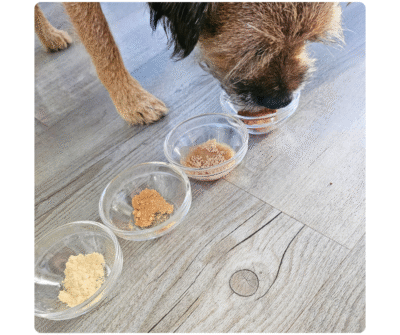
– Slippery elm powder (Ulmus Rubra) or marshmallow root powder (Althaea officinalis) can be offered for their gut soothing properties, they’re rich in mucilage which soothes and protects the digestive system. Marshmallow root is also naturally rich in inulin which is known to feed the beneficial bacteria.
– Prebiotic herbs such as powdered dandelion root (Taraxacum officinale) or psyllium husk (Plantago ovata) can be offered to feed the good bacteria.
Offer For Self-selection: Allow your dog to choose their own herbs to support their wellness and healing. You can easily do this by offering a small amount of the herb, each in their own separate bowl or plate if you have multiple, and offer to your dog, they will instinctively take or gravitate towards the ones they know they need.
3. Support the Beneficial Bacteria
– Ground flaxseeds contain liganins and fibre that help feed the beneficial gut bacteria.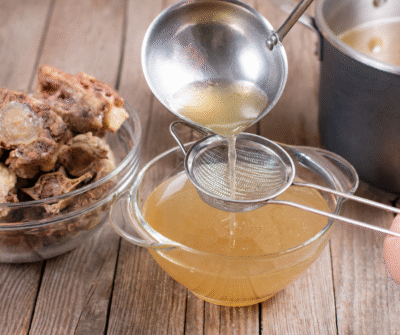
– Incorporate bone broth regularly: Bone broth is full of gut loving substances like glycine and proline, which are amazing for creating a healthy gut environment and helping to repair any damage to the gut lining. This is a very nourishing addition.
– Offer small amounts of dog-safe kefir or live yoghurt (separate from their normal food) to introduce healthy bacteria.
– Supplement with a natural soil-based probiotic: Adding a soil-based probiotic for a short period of time can be beneficial for some dogs to help re-populate the gut with healthy bacteria.
4. Reduce the use of Unnecessary Chemicals
– Opt for natural pest control: Use natural flea and tick repellents wherever possible.
– Review medical and chemical challenges: Review the need for routine vaccines, chemical wormers, and flea treatments to avoid unnecessary chemical challenges (discuss with your vet where appropriate).
– Utilise Titre Testing: Use titre testing to check immunity levels instead of just giving routine booster vaccines to help reduce the chemical burden on the body.
– Perform Faecal Worm Counts: Use regular faecal counts to monitor for parasites, reducing the need for automatic chemical worming.


An important thing to remember is every animal is a unique individual; this isn’t a fixed process but a way of allowing you to gain deeper knowledge, understanding and practical tips to support your beloved companion.
Being truly present and listening to your animal is how they will guide you on their healing journey.
If you are looking for personalised holistic support for your animal family, please do feel free to get in touch.
Research sources:
Biome 4 pets
My pet nutritionist
Essential Oils For Animals – Nayana Morag
By Felicity Stenson | Earthly Animal Healing


Leave A Comment